




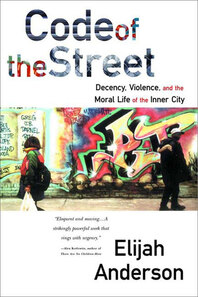
Code of the Street
Decency, Violence, and the Moral Life of the Inner City
17 September 2000
Territory Rights — Worldwide.
Description
"Unsparing and important.… An informative, clearheaded and sobering book."—Jonathan Yardley, Washington Post
Urban violence is often stereotyped as senseless, but in fact, it is highly regulated through an unwritten code of the street. This set of rules is a powerful and pervasive form of etiquette that governs the way people negotiate safety in public spaces. In this seminal urban ethnography, Elijah Anderson illuminates the informal code that develops when formal institutions of law and order prove untrustworthy or unjust.
Reviews
"This is the best treatment we have of the tormented inner life of young people wrestling with nihilism in a society indifferent to their plight and predicament." — Cornel West
"A quarter century after its heralded appearance, Anderson’s landmark volume continues to inform our understanding of how Black males in the inner city are vulnerable to racial oppression and neighborhood violence. Code of the Street is an enduring sociological classic that commands our respect and demands our attention." — Michael Eric Dyson, author of the New York Times best-selling Tears We Cannot Stop: A Sermon to White America
"A powerful and poignant book that is must reading for those who want to understand the problem of urban violence and how it can be corrected." — William Julius Wilson, Lewis P. and Linda L. Geyser University Professor, Harvard University
"A brilliant diagnosis of the internal factors that hold blacks back." — Wall Street Journal
"One of the most interesting examinations of poverty, violence and sociology to emerge in recent years." — Boston Herald
"One of our best ethnographers.… Anderson is excellent in explaining how the criminal element, through a numerical minority, comes to dominate public space." — New York Times Book Review
"Important.… [Anderson] demonstrates, time and again, how optimism, ambition and decency can sprout in the most unlikely places, given even the slimmest chance." — Newsweek
"Eloquent and moving.… A strikingly powerful work that rings with urgency." — Alex Kotlowitz, author of There Are No Children Here