




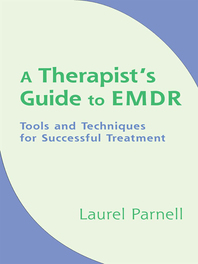
A Therapist's Guide to EMDR
Tools and Techniques for Successful Treatment
16 January 2007
Territory Rights — Worldwide.
Description
A Therapist's Guide to EMDR reviews the theoretical basis for EMDR and presents new information on the neurobiology of trauma. It provides a detailed explanation of the procedural steps along with helpful suggestions and modifications.
Areas essential to successful utilization of EMDR are emphasized. These include: case conceptualization; preparation for EMDR trauma processing, including resource development and installation; target development; methods for unblocking blocked processing, including the creative use of interweaves; and session closure. Case examples are used throughout to illustrate concepts. The emphasis in this book is on clinical usefulness, not research. This book goes into the therapy room with clinicians who actually use EMDR, and shows readers how to do it in practice, not just in theory. In short, this is the new, practical book on EMDR.
Reviews
"Crafted by a seasoned clinician...[Parnell's] abundant examples are helpful and thought provoking...leave one pondering with appreciation the intervention she describes." — PsycCritiques
"Any interested practitioner will benefit from an encounter with this novel approach to helping patients recover from trauma." — New England Psychologist
Also By: Laurel Parnell 
Rewiring the Addicted Brain with EMDR-Based Treatment
Paperback, 2020
Attachment-focused EMDR and resource tapping applied to the clinical challenge of addictions recovery.
Rewiring the Addicted Brain with EMDR-Based Treatment
E Book, 2019
Attachment-focused EMDR and resource tapping applied to the clinical challenge of addictions recovery.
Attachment-Focused EMDR: Healing Relational Trauma
Hardback, 2013
Integrating the latest in attachment theory and research into the use of EMDR.
Attachment-Focused EMDR: Healing Relational Trauma
E Book, 2013
Integrating the latest in attachment theory and research into the use of EMDR.
EMDR in the Treatment of Adults Abused as Children
Hardback, 1999
Treatment of abuse survivors is extremely challenging, whatever the modality. Clients may experience intense emotional abreactions during therapy, report horrifying memories, and become stuck...
