




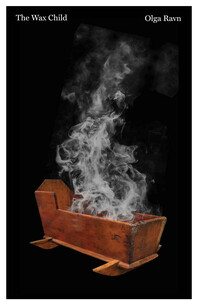
Description
An astounding, haunting tale of accused witches—a book of sorcery itself—from the celebrated author of The Employees and My Work
LONGLISTED FOR THE INTERNATIONAL BOOKER PRIZE 2026
SHORTLISTED FOR THE NBCC GREGG BARRIOS BOOK IN TRANSLATION PRIZE
In seventeenth-century Denmark, Christenze Kruckow, an unmarried noblewoman, is accused of witchcraft. She and several other women are rumored to be possessed by the Devil, who has come to them in the form of a tall headless man who gives them dark powers: they can steal people's happiness, they have performed unchristian acts, and they can cause pestilence or death. They are all in danger of the stake.
The Wax Child, narrated by a wax doll created by Christenze Kruckow, is an unsettling horror story about brutality and power, nature and witchcraft, set in the fragile communities of premodern Europe.
Deeply researched and steeped in visceral, atmospheric detail, The Wax Child is based on a series of real witchcraft trials that took place in Northern Jutland in the seventeenth century. Full of lush storytelling and alarmingly rich imagination, Olga Ravn also weaves in quotes from original sources such as letters, magical spells and manuals, court documents, and Scandinavian grimoires.
Reviews
"It should be read by everyone." — Thessaly La Force, The New York Times
"Dark and strange and beautiful and completely gripping" — Mark Haddon
"The Wax Child spins its own spellbinding tale of loss and longing as the true story of Christenze Kruckow weaves through language that makes what happened to her, and to so many other women like her, pulse with a clarity more real than fact. A magnificent book. A true masterpiece of both substance and style." — Kirkus Reviews (starred)
"Olga Ravn is a master and an alchemist. There's nobody else doing quite what she does." — Samantha Harvey
"Gripping... This devilishly subversive feminist anthem is one of a kind." — Publishers Weekly (starred)
"The story is told by a doll carved from beeswax... a fascinating and totally inhuman consciousness, one of many startling feats in this book." — Emma Alpern, New York Magazine
"Ravn's prose is striking, richly marbled with quotation and detail pulled from primary sources. The texture of this true language is perfect alongside Ravn's keen ear for viscera: blood sucked from a cut finger, pens scratching and leaking, teeth sliding through the narrator's wax body." — Emily Temple, LitHub
"Addictive and unsettling." — Claire-Louise Bennett
"An instant classic that feels passed down from centuries ago and yet utterly unique, fresh, and modern. Another stunning, surreal journey from an author who seems to never disappoint." — Jeff Vandermeer
"Ravn’s narrative gathers pace with unflinching and claustrophobic swiftness." — Kat Trigarsky, Washington Post
"Ravn creates a visceral atmosphere using rich, tactile details... The Wax Child asks to be read in a single, rapturous sitting in which its dark, fast-paced and disturbing narrative pulls the reader immediately into otherworldly environs." — Anandi Mishra, ArtReview
"An intensely poetic portrait of everyday sorcery and female solidarity... The Wax Child is richly evocative, beautiful, creepy and visceral" — Aida Edemariam, The Guardian
"Olga Ravn's prose is at once concise and freewheeling, and bristles with astonishing metaphors... An outstanding novel." — Ella Walker, The Irish Times
"This startling, original and beautifully written novel invites us to rethink our ideas about how history is told and what witchcraft really means." — Belinda Bamber, Country & Town House
"Ravn’s fourth novel is gorgeously mercurial: fragmented, slippery, unresolved (a quality masterfully captured by Martin Aitken’s translation)." — Beejay Silcox, Times Literary Supplement
"Ravn is one of Europe’s brightest young writers; the Dane’s eerie sci-fi tale, The Employees, almost won the International Booker in 2021. This one, about a 17th-century Danish witch trial, tells a sinister tale of magic, violence and the lethal power of the imagination." — Erica Wagner, The Telegraph
"Literature about witch trials usually hangs on the premise that the accused women are innocent — that they are just disliked in their town, or a bit too outspoken. The Danish author Olga Ravn’s novel flips that idea around — what if they really were witches? She has resurrected four women who were executed for witchcraft in 17th-century Denmark and told their stories through the eyes of an unusual narrator: an all-knowing wax doll. The result is creepy, compelling and vivid: you can taste the mead and smell the pig dung." — The Sunday Times
"Don’t even bother getting your intimidatingly well-read friend one of the Booker shortlist titles – they’ve already got them and have an opinion ready to go. Instead, opt for this strange but sumptuous story set in 17th-century Denmark. It follows four women accused of witchcraft, and is told through a creepy but compelling narrator: an all-knowing wax doll. It’s got a good chance of being nominated for next year’s International Booker, so you’ll look very in-the-know." — Laura Hackett, The Times
"Deeply immersive and immensely pleasurable to read...The Wax Child is one to remember and return to, a story of power and who wields it, a story of women and how they stick together—and fall apart. " — Madeline Schultz, The Chicago Review of Books
"Ravn rejects the lurid spectacle that witch hunts and trials once provided. Instead, she directs the reader’s attention to the social rewards that witchcraft, as practiced in this novel, offers: namely, friendships with other women and the chance to enact (if not achieve) rebellion against the men and social forces that have circumscribed their lives." — Irene Katz Connelly, Los Angeles Review of Books
"t's primitive poetry that gives The Wax Child its claustrophobia, intensified by drone-like repetitions. But the claustrophobia is an index of something else too: the very intimacy of adversaries, accusers and accused, isolated on a cold and dank peninsula... In the end we're left with the mystery of sympathy: between friends, between life and non-life, between objects." — Ange Mlinko, London Review of Books
"Lush, forceful writing...Ravn manages to summon the everyday dust and debris from the past, in an act of witchcraft similar to the magical explorations of the wax child." — Historical Novel Society
"Weaving Nordic folklore together with historical documents and her own imagination, Olga Ravn delivers a story ripe with suspense and immersive detail." — Cary Holladay, The Hudson Review
"This unforgettable novel is compulsively readable yet anything but biddable . . . This haunting, gripping and singular historical novel cast a spell on us." — International Booker Prize Committee
"In The Wax Child, novelist and poet Olga Ravn turns 17th-century terrifying Danish women's history into a sublime novel of struggle and resilience." — Terry Hong, Shelf Awareness
Standalone Ebook
9780811238847

COMING SOON