




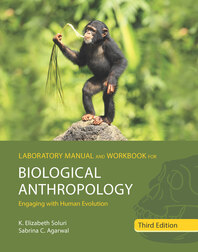
Laboratory Manual and Workbook for Biological Anthropology
Engaging with Human Evolution
Third Edition
1 July 2027
Territory Rights — Worldwide.
Description
Bring modern anthropology into every lab
A perennial bestseller, Soluri and Agarwal’s Laboratory Manual and Workbook for Biological Anthropology sets a new standard in its Third Edition. Enhanced ebook features, updated exercises, and refreshed visuals make exploring human, primate, and fossil evidence more interactive and engaging. The Third Edition’s emphasis on ethics, equity, and real-world relevance reflects current disciplinary conversations and highlights contemporary anthropology's commitment to diversity, sustainability, and responsible research.
Suitable for any course format, the Third Edition can be assigned alongside any introductory textbook or as a comprehensive standalone resource. Supported by robust student and instructor resources, it continues to deliver an exceptional lab experience at an exceptional value.
Highlights of the Third Edition:
• Ethics and representation are interwoven throughout all labs, reflecting current disciplinary discussions about the field’s colonial foundations. All images of human remains comply with current ethical standards, ensuring consent from donors or descendant communities.
• Connect your students to the living field through the latest discoveries and voices driving the discipline forward. Recent discoveries are incorporated throughout the manual with figures, maps, timelines, and diagrams of the latest primate and fossil findings. Profiles of contemporary scholars have been updated and moved earlier in each chapter for stronger thematic integration.
• Keep students engaged and on track in any teaching format. Revisions informed by instructor and student feedback make exercises clearer and more adaptable for in-person, online, and hybrid learning environments. Most labs have been revised, replaced, or newly developed to sustain engagement and discourage online answer sharing. Questions highlight current, real-world topics—such as public health and science communication—and encourage engagement with contemporary media sources.