




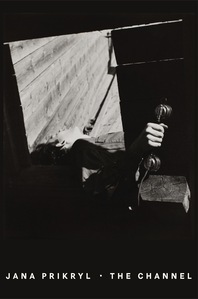
The Channel
Poems
3 November 2026
Territory Rights — Worldwide including Canada, Singapore and Malaysia, but excluding the British Commonwealth.
Description
Shortlisted for the T.S. Eliot Prize
A volatile concentration of intimate and historical dramas, Jana Prikryl’s new book aims to outrun her own “dazzling linguistic agility” (Louise Glück)
In her electrifying fourth collection, Jana Prikryl harnesses the power of King Lear to look back at her family story and see more clearly our own mad kings, our hunger for authority. Listening for Cordelia as a dissenter banished from home, Prikryl finds that outside her native tragedy the silent woman has more to say. The centuries and settings molt from the Bronze Age to Jacobean England to the Cold War to the digital now, as her voice pushes itself into evasive maneuvers, urgent digressions, bad jokes, worse puns, and desperate expressions of love, and she struggles to escape the roles written for her. What new language, what new reality—these poems ask—is available beyond the borders of any given role?
From “Insomnia at Anchor”:
... the meter tells me who I was
the corridor I paced as Antony
Friends, best hour of school, can’t teach the fates
they couldn’t worry us, reading reassured
a book but carried out your feelings, ferried
away from home, amazing how stubbornly
we worried wrong, the fates will see you now
like rushes wetly cut from streams and tipped
in flame, or when that girl became a reed
is there a song that won’t make use of her
Reviews
"[Jana Prikryl's] rewiring of the sentence creates dazzling leaps of thought, jumping from refugee camps to Shakespeare’s Fool battling with a tsunami of text messages to dissident window cleaners out of the novels of Milan Kundera to tender moments shared with her father. It’s a bold 'stepping out of form' that turns its back on the neatness of the lyric, and by doing so creates a new poetic language." — The Guardian
"Jana Prikryl—like Vladimir Nabokov or Rosmarie Waldrop—writes in a language at once intimate and alien; her mastery bears traces of the ruptures, geopolitical and personal, that threw her into English in the first place. There is beauty in both her eloquence and how it breaks up under pressure." — Ben Lerner
"Reading The Channel is like watching a slow, gorgeous, revelatory trick shuffle—of characters we believe we know, of language we believe we understand. As soon as I finished, I wanted to start again." — Patricia Lockwood
"In poems that sound both contemporary and timeless, Jana Prikryl joins Keats, Dickinson, and Berryman among the literary heirs of Shakespeare’s dispossessed king. Not unlike Lear, her book is a philosophical, furious, and tender address to the extended family to whom we all belong." — Srikanth Reddy
Awards
Shortlisted — T. S. Eliot Prize, 2026
Also By: Jana Prikryl 

Midwood: Poems
Paperback, 2024
Midwood is a restless and intimate volume from a poet James Wood has called "one of the most original voices of her generation"
Midwood: Poems
Hardback, 2022
Midwood is a restless and intimate volume from a poet James Wood has called “one of the most original voices of her generation.”
Midwood: Poems
E Book, 2022
“Midwood makes clear and unmistakable the increasing singularity of [Jana Prikryl’s] artistry.” —Nathan Blansett, Los Angeles Review of Books
Midwood is a restless and intimate volume from a poet...