




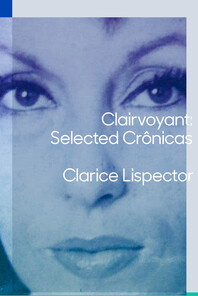
Description
In the magnificent feast of Clarice Lispector’s writing, her crônicas—short, vivid, off-the-cuff newspaper pieces—are the toothsome canapés she whipped up every Saturday
I am convinced that during the Stone Age, I must have been wounded by the love of some man, because a certain secret fear of mine dates from that time.
The crônica, a literary genre peculiar to Brazilian newspapers, allows writers (or even soccer stars) to address a wide readership on any theme they like. Chatty, mystical, intimate, flirtatious, and revelatory, Lispector’s Saturday columns from 1967 to 1973 in Rio’s leading newspaper, the Jornal do Brasil, were extraordinarily free-ranging, taking the form variously of memories, essays, aphorisms, serialized stories, and interior monologues. In every mode, her insights make one sit up and think, whether about love or children or social ills or pets or society women or writing or the nature of reality: We have accumulated things and certainties because we have neither the one nor the other.
The things I’ve learned from taxi drivers would be enough to fill a book. They know a lot: they really do get around. I may know a lot about Antonioni that they don’t know. Or maybe they do even when they don’t. There are various ways of knowing by not-knowing. I know: it happens to me too.
Reviews
"Funny, dark, whimsical, intimate, and always self-questioning, the crônicas seemed to touch everything: reflections on writing, motherhood, the seasons, depression, love, suffering, death." — Jared Marcel Pollen, The Yale Review
"For those unfamiliar with her, [the crônicas] open a door into her uniquely challenging and rewarding body of work. Stretching over a decade, the pieces, some amounting to a few sentences, some many pages long, make up a self-portrait in bits and pieces. The result is, like Lispector herself, witty, mystical, surreal and profound: a treasure to return to again and again." — Madoc Cairns
"This is Clarice Lispector as a one-woman chorus and psychic weather forecaster, and the charm, wit and engagement that she brings to her columns transcends barriers." — John Biscello, Riot Material
"These columns should establish her as being among the era’s most brilliant essayists. She is masterful, even reminiscent of Montaigne, in her ability to spin the mundane events of life into moments of clarity that reveal greater truths. Superb, wonderfully obsessed with exuberance and what it unlocks and reveals." — Publishers Weekly (starred review)
"Better than Borges." — Elizabeth Bishop
"If she played with the superficial truth, it was in service, she believed, of exposing one deeper, of passing readers a brief-lit lantern for the moonless dark of ourselves, even if that light revealed, sometimes, more contradiction, more chaos, more flittering soul-storm. Her crônicas blurred lines between genre—some are like little Zen koans, some lyrical reminiscences, while others are harder to categorize, reading like parables or flash fiction. At times, they also muddied demarcations between nonfiction and fiction, resurrecting the oldest question of form: Where does nonfiction truly end and fiction begin, and what do we do with texts where we do not know the answer?" — Gabrielle Bellot, The Paris Review
Also By: Clarice Lispector 

Covert Joy
Paperback, 2026
Twenty of the greatest Clarice Lispector stories selected from the trove of her amazing short fiction, now in paperback with a personal new preface by her son.Covert Joy: Selected Stories
E Book, 2025
From the massive treasure house of her hugely successful Complete Stories, gathered here are the most glittering gems of Clarice Lispector’s short fiction
The Besieged City
Paperback, 2024
Now in paperback, The Besieged City—Clarice Lispector’s electrifying third novel—tells of a shallow girl becoming a desirable but highly materialistic woman in a rough-and-ready town
The Apple in the Dark
Paperback, 2023
“The best one,” as Clarice Lispector called The Apple in the Dark, her famously intense 1961 novel
The Woman Who Killed the Fish
Hardback, 2022
Four beguiling tales for children of all ages.
A surprising new facet of Clarice Lispector’s genius
Also By: Margaret Jull Costa
Memorial de Ayres: A Novel
Hardback, 2026
From a maverick of 20th century fiction, a domestic drama set on the cusp of Brazil’s abolition of slavery
The Complete Works of Ricardo Reis
Paperback, 2026
A bilingual collection of exquisite poems and prose by one of Fernando Pessoa’s most famous “heteronyms”, Ricardo Reis

Quincas Borba: A Novel
Paperback, 2025
A satirical tale of a young man flush with newfound wealth who promptly gets swindled, Quincas Borba is an inspired critique of nineteenth-century Brazil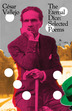
The Eternal Dice: Selected Poems
Paperback, 2025
One of the great poetic innovators of the 20th century, the Peruvian poet Cesar Vallejo now has a translatorworthy of his genius
Adam and Eve in Paradise
Paperback, 2025
Never before in English, this delectable novella offers a hilarious new version of Genesis, where, rather than living in innocent bliss, Adam and Eve live in terror of being stomped by an...
Also By: Robin Patterson
Memorial de Ayres: A Novel
Hardback, 2026
From a maverick of 20th century fiction, a domestic drama set on the cusp of Brazil’s abolition of slavery
Quincas Borba: A Novel
Paperback, 2025
A satirical tale of a young man flush with newfound wealth who promptly gets swindled, Quincas Borba is an inspired critique of nineteenth-century Brazil
Quincas Borba: A Novel
Hardback, 2024
A vibrant new translation of Machado de Assis's classic novel about a young man flush with newfound wealth, who promptly gets swindled
Dom Casmurro: A Novel
Paperback, 2024
A masterpiece of realism, Machado de Assis’s Dom Casmurro probes the mind of a distrustful husband with delusions of grandeur
Dom Casmurro: A Novel
Hardback, 2023
A masterpiece of realism, Machado de Assis’s Dom Casmurro probes the mind of a distrustful husband with delusions of grandeur